The Ultimate Guide to Carpet Mould Removal: A Complete Resource for NZ Homeowners.
Mould infestation is a common issue in Kiwi households. This issue is becoming increasingly critical, especially in areas with high humidity and minimal air circulation. However, those in dry regions and well ventilated areas will still not be spared from this issue.
The special microclimate in Christchurch, from the damp winter mornings in Riccarton to the moist air around Sumner, provides an ideal environment for spores to develop. Whether it’s a heritage residence in St Albans or a new build, spores will fall and germinate deep within your carpet.
If left untreated, it will become a much more severe problem: damaging both your flooring and indoor air quality. And if you’re experiencing this issue, you’ve come to the right place. This guide will give you advice on how to get rid of mould in carpets by identifying the problem and directing the best treatment methods.
From DIY solutions to knowing when to seek professional help, the step-by-step prevention tips will also help you protect your carpet and maintain a healthier living environment.
Table of Contents
Understanding Mould Growth in Carpets
As a type of fungus that thrives in moist environments, mould will easily grow in moisture trapping carpet. They spread through the air and attach to various surfaces, including carpets. Once they land on the right surface, they spread rapidly.
This risk increases if left untreated for an extended period. According to building research from BRANZ, moisture must be addressed within 48 hours to prevent permanent damage to flooring materials. So, if your carpet has been affected by a water spill or leak, address the issue promptly.
So, it is not surprising that carpets installed in bathrooms, stored in basements, as well as in other areas prone to humidity will be very vulnerable to infestation. However, carpets that are rarely cleaned are no less risky, as they trap liquids, dust, and organic matter. This is even worse in Kiwi homes, where windows are often closed during winter.
Health Risks Associated with Mould Exposure
The most affected by mould infestation are those with asthma, allergies, or weakened immune systems, since the spores can also enter the bodies of any living creatures. Inhaled spores, for example, can cause respiratory issues: coughing, sneezing, nasal congestion, throat irritation, etc.
Even something as simple as sticking to the skin can cause health issues, such as skin irritation (rashes, itching, and bumps) or allergic reactions (eye irritation, runny nose, etc.). Long term exposure may endanger health, even for healthy individuals. This will get more dangerous if the growing mould variant can secrete toxins (like Black Mould) – causing infections that can even attack the nervous system.
Identifying Mould in Your Carpets
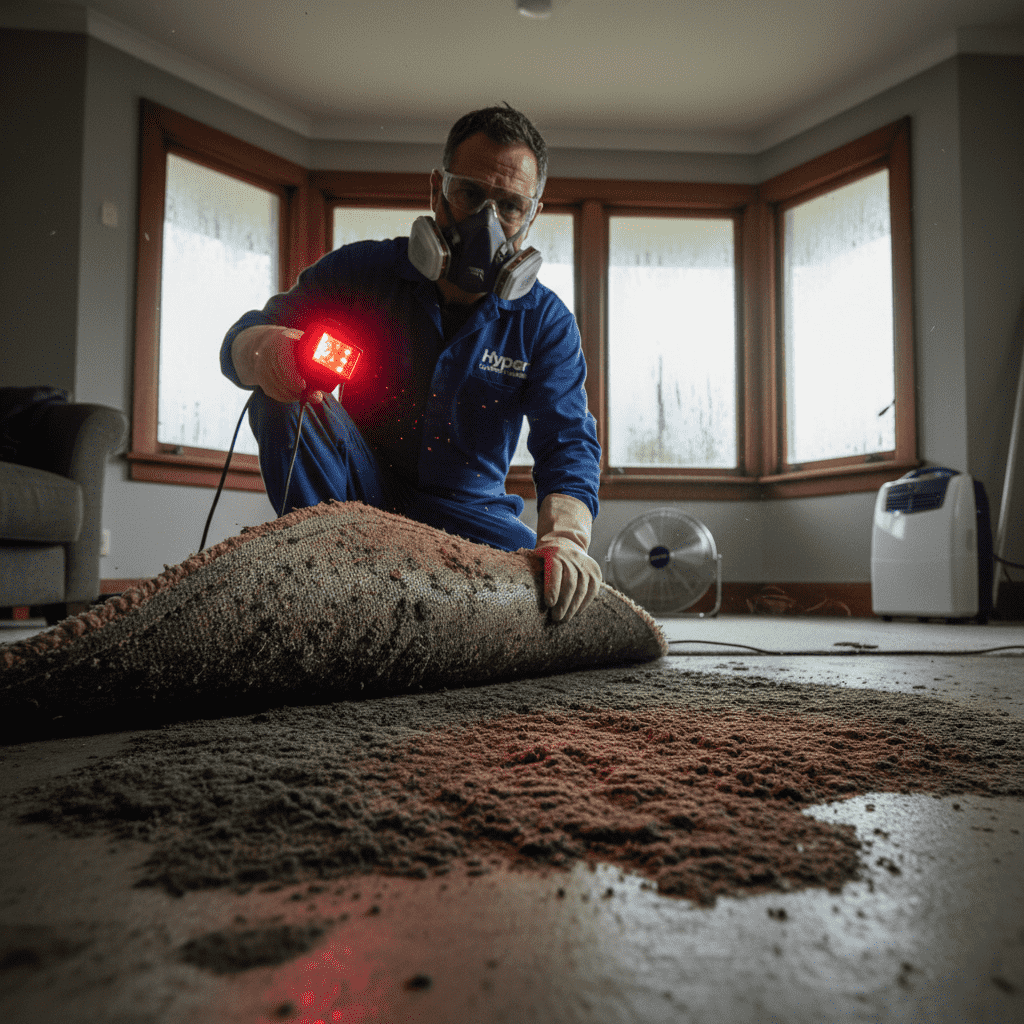
It’s a bit tricky, particularly for those who lack experience dealing with mould infestation. However, some signs can indicate the presence of mould. You can check beneath the surface by lifting the carpet and examining the padding if you experience:
- Wet or high moisture carpet: If your carpet has been damp for a long time, you should be on alert. Perform a thorough inspection – it can be a preventative measure before the worst happens.
- Musty or earthy odour: Then, if it is somehow emitting unpleasant smells, open the subfloor under the affected area.
- Visible stains that are not inherent to the manufacturing process: The indication will be even stronger if discolouration or patches are visible behind the carpet. It can happen in many forms, whether black, green, brown, white, or any dark hue.
Essential Tools and Materials for Mould Removal
If your carpet is already infested with mould, you can try a DIY treatment as a “first aid” measure. While it may seem trivial, the right equipment is essential to ensure effective and safe treatment:
Protective equipments
While a full hazmat suit is excessive, a mask/respirator, goggles, gloves, and long sleeved clothing can protect against airborne spores released during cleaning. This equipment can prevent direct contact with sensitive areas and the risk of inhalation.
Cleaning tools
The essentials are scrub brushes along with sponges for scrubbing and scraping off the mould. Make sure the sponge has a rough layer on the side, and use a stiff bristled brush that is durable and can withstand hard scrubbing.
Sanitation products and disinfection solutions
If the symptoms aren’t too severe, you can use a cleaning solution made from everyday organic compounds, such as white vinegar, baking soda, or essential oils. Hydrogen peroxide, or any commercial chemical based mould removal, is recommended for more serious cases. Make sure whatever you use is environmentally friendly and won’t harm your loved ones. Also, prepare a spray bottle to contain it.
⚠️Safety Note – Never mix bleach with vinegar, ammonia, or other cleaners, as this creates dangerous fumes. Always test any solution on a hidden corner of the carpet first to check for colour fading.
Vacuum cleaner
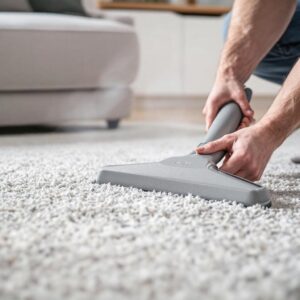
A carpet cleaner is a must have for every home with carpet installed. It’s used both before and after the cleaning process: removing accumulated filth. It’s highly recommended to have one with a HEPA filter so you can reach even the smallest particles.
Dehumidifier and fans
These two tools are essential for the drying process. Even carpets that have undergone mold removal require thorough drying for the “finishing touch”. Dehumidifiers can reduce humidity in the air, while fans can improve air circulation in the room.
Step-by-Step Guide to Safely Remove Mould from Carpets
After getting all the above needs, now it’s time to follow this step-by-step guide. Be sure to do every detail in order and do not skip anything to get the best results:
1. Preparing the area
Before you begin, ensure the room where the carpet is located is well ventilated. Open windows and doors to avoid creating a confined space. To increase airflow, use a fan. Wear all protective gear properly.
2. Surface cleaning the carpet
Use a vacuum cleaner with a HEPA filter to remove dirt from your carpet. This can also remove loose mold and spores. Vacuum slowly and thoroughly over the entire carpet – not just the infested area. When finished, change the vacuum bag or sanitize the canister to prevent the spread of spores.
3. Scraping
Next, try scraping the mold using the brush. After vacuuming, some mold can often be removed more easily with just a little yank. Use gentle movements to avoid damaging the carpet fibers. If you feel it’s sufficient, rinse the brush thoroughly to remove any remaining spores.
4. Applying cleaning products
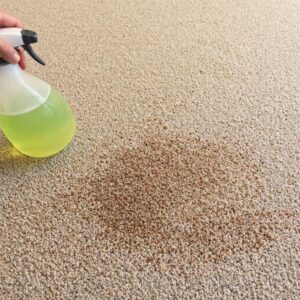
Choose the one that best suits your needs and the severity of your condition. For commercial products, follow the directions on the packaging. Spray evenly over the infested area, and don’t over soak it.
5. Let it sit
Leave it still for 10-15 minutes. Let it penetrate the deepest layers, and its effect works: weakening the mold and making the subsequent cleaning process more manageable. This process will break down and kill the mould from within.
6. Start scrubbing
First, scrub the area thoroughly with a brush. Then, use the rough side of the sponge to wipe. Repeat this sequence several times. If it is too dry, spray again. You need to keep the carpet wet enough with the solution so you can scrub more vigorously. Make sure to scrub evenly across all corners.
7. Rinse and extract
Prepare hot water, then pour some into the sponge to disinfect it. Wait until the water temperature drops, then use the sponge’s soft side to rinse the carpet. Blot the cleaned spot to remove any remaining mould and leftover cleaning solutions. Leave it until it’s dry enough. For maximum results, you can also vacuum it again.
8. Dry the carpet
While keeping the fan running, use a dehumidifier to maximize the drying process. This is a crucial part and will significantly impact the final result. Leave to dry completely to prevent mould from returning.
9. Monitor the progress
Once all processes are complete and activities are back to normal, continue to monitor the cleaned area regularly. The dehumidifier can continue to function to maintain humidity levels.
Natural Remedies for Mould Removal
For households with sensitive members (elders, children, pets, etc.), it’s recommended to use organic cleaning solutions. This is gentle yet powerful for mould removal, safe for all living creatures, and environmentally friendly:
White vinegar
This substance is one of the most potent natural remedies for fighting fungal infections, including mold. It’s not just used in food; when dissolved, it can also be used as a cleaning solution. When used regularly, it kills mold and may prevent its recurrence. You can dissolve it in water at a 1:1 ratio for a proper mixture.
Baking soda
It can help eliminate mold infestations by absorbing the moisture in the carpet. Many also use it to eliminate unpleasant odors. Simply sprinkle it on the infested area, let it sit overnight, then vacuum thoroughly to remove any residue.
Tea tree oil
The oil extracted from the Melaleuca alternifolia plant also has powerful anti fungal properties. Traditionally, it is used to treat infections of the outer body (skin, face, nails, etc.). But when diluted to the right concentration, it can also be used as a cleaning solution. Dissolve one teaspoon in a cup of water, and you’ll have enough for a bottle of anti mould solutions.
Commercial Products for Effective Mould Removal
However, if your mold infestation is more severe, using commercial chemical based products is highly recommended. These chemicals are very harsh, so extreme caution is required when using them:
Hydrogen peroxide
It is the most commonly used natural bleaching agent for combating mould infestation and the stains it leaves behind. When diluted to the right concentration, you can use it to brighten carpet surfaces.
Mould and mildew remover
It’s specifically designed to combat mold and mildew infestations. You can transfer the solution to a spray bottle for easier use or apply it directly.
Anti-fungal compound
Unlike the previous, this can be used for a broader range of fungal infestations. It can also be used regularly to prevent the growth of any form of fungus by lightly sprinkling it on your carpet from time to time without soaking it. Make sure you do it on dry days to minimise any trapped moisture.
Enzyme cleaners
While not as effective as the other commercial products above, enzyme cleaners can also be used as an alternative. Use sparingly and follow the instructions on the product label/packaging.
Preventing Mould Growth in Carpets
Before a problem happens, it’s certainly better to take preventive measures. However, mould prevention isn’t as simple as regular cleaning. Here are some tips you can follow to minimise mould growth:
Control humidity level
Yes, humidity level is crucial to mould prevention, so it is mentioned first in these tips. Always set the dehumidifier to maintain an indoor humidity level between 30-50% level to reduce the moisture contained in the air.
Avoid water damage
Whether it’s a spill, seepage, leak, or flooding, it will be a greater problem if it gets on your carpet. Always pay attention to all sides of the carpet, both the padding and the subfloor, and keep it dry.
Improve ventilation and air flow
Good ventilation can maintain humidity levels while increasing air circulation. Open doors and windows frequently, especially on sunny days. For rooms that are more airtight but prone to moisture (bathrooms, kitchens, etc.), you can install exhaust fans.
Regular cleaning
Carpets that are frequently left dirty are more likely to support mould growth. Spores brought in from outside and left on the carpet can still grow – waiting for the right conditions. Vacuuming at least once a week can be the best DIY prevention. Consider professional carpet cleaning once a year for better results.
Use anti-mould products occasionally
It can be done during the initial installation or replacement of new carpet. Use anti mould padding and any available anti fungal treatments. The preventive measure should be done on every carpet.
Check moisture-prone areas
Areas like corners, near windows, bathrooms, and basements are often overlooked. Continuously monitor the carpet in those areas. Take immediate action if you notice any potential mold growth.
When to Call a Professional for Mould Removal
DIY measures aren’t always enough to treat or prevent mould growth. In the following more severe cases, professional help is needed to avoid further damage:
The Hyper Steam Advantage – Although DIY solutions can provide a good “first aid” solution, these merely scratch the surface of the problem. At Hyper Carpet Cleaning, we employ professional Hyper Steam solutions. Utilizing high temperature precision heating allows us to eliminate mold spores at their core and completely extract them, instead of pushing them further into the underlay by mere scrubbing.
Extensive mould growth
If it’s too late for you to notice it, and mould infestation has spread to the whole carpet in the house. This scale is no longer achievable by individual DIY efforts. Industrial grade equipment and a trained team of professionals can more effectively address such issues.
Hard-to-reach areas
For hidden, harder to reach areas, you can rely on professionals. They have specialised tools that are much more handy than standard domestic/household cleaning equipment.
Recurring mould problems
If your DIY treatment has proven successful at eliminating mould infestations but they keep recurring, it’s time to call in a professional. They can conduct a more thorough assessment and identify the root cause of the problem that leads to recurring issues.
Health concerns
Mold infestations typically don’t cause serious health problems. However, if they do occur, professional treatment becomes essential. They can identify health related problems and provide the best hygienic measures for handling them.
Black mould and other dangerous variants
When dealing with these mould variants, it is highly recommended to have them professionally treated rather than attempting a DIY treatment first. Not only can this be a health hazard if left untreated, but any careless cleaning without the proper equipment can be dangerous. Trusting it to trained professionals with superior protection will be the wisest move.
To help you decide if you need a professional, here is a quick comparison:
| Feature | DIY Cleaning | Hyper Steam Professional |
| Success Rate | Good for small, fresh spills | Best for deep rooted infestations |
| Drying Time | 24–48 hours | 4–8 hours |
| Spore Removal | Manual scrubbing (Surface) | High temp extraction (Deep) |
| Risk | High risk of re-growth | Guaranteed results |
Conclusion: Maintaining a Mould Free Home
Keeping carpets free from mould protects both your flooring and your family’s health. Early detection, proper cleaning techniques, and consistent moisture control are key to long term prevention.
For persistent or severe mould issues, professional support delivers peace of mind and lasting results. Don’t let mould ruin your family’s health and your home’s value. Call Ben at Hyper Carpet Cleaning today at 022 193 1007 to get your free mould evaluation and quote our professional steam treatment. Let’s create your healthier home with our specialized Christchurch carpet cleaning services.