How To Sanitise Carpet Without A Steam Cleaner
Besides providing warmth, carpets can also function as “soft filters”: collecting indoor dust and tracked-in debris. It is like a “double-edged” sword. Yes, it can keep other areas of the house clean, but it can also be a source of filth.
For a thorough cleaning, many people recommend a steam cleaner. Of course, the catch is that not everyone can have one at home. The good news? You can still clean your carpet using simple domestic methods, without even having to soak the fibres – which, if done without professional intervention, risks damaging it.
For this reason, this guide will walk you through safe, practical steps for sanitising carpet without a steam cleaner in many New Zealand homes, and when it’s better to call the professionals at Hyper Carpet Cleaning Christchurch.
Do You Really Need To “Sanitise” Your Carpet?
Before you understand the need for carpet sanitising, you must first understand what it is and the difference between cleaning, deodorizing, and disinfecting. These terms are often difficult to understand and misunderstood – each plays a different role in carpet hygiene.
As a thermal insulator, carpet also has fibres, layers, and strands that can trap dust, pet dander, pollen, and other irritants deep within the pile — something also highlighted by the Asthma & Allergy Foundation of America. Understanding the level of care you need matters:
- Cleaning typically involves only removing dirt, dust, and other visible daily debris on the surface. It aims to improve appearance and doesn’t necessarily target germs.
- Sanitising usually requires a slightly more complex effort than cleaning. The goal is to reduce microbial levels to an acceptable level, especially in homes with lots of children playing, pet accidents, or after the occupant has recovered from a minor illness (flu, cold, vomiting, etc.)
- Disinfection becomes even more complex because it specifically targets bacteria, viruses, germs, and any other pathogens. Usually, this is done to prevent the spread of disease or to address it (if residents have just recovered from illness).
- Deodorising is usually just a finishing touch and doesn’t remove harmful microorganisms. Its purpose is to keep the carpet smelling fresh and clean: protecting it from spills, pets, and moisture.
Before You Start – Safety, Fibre Type, And Patch Testing
Certainly, those who really understand their own carpet will know that it can be made from different materials. From the most common material found in most Kiwi homes: wool, to more varied materials made from synthetics and blends, all three react differently to any cleaning chemicals. Therefore, always check the care label or manufacturer guidelines so that your hygiene efforts are not wasted. But here are the general rules:
- Never use bleach or any harsh chemicals, as they can strip colour, weaken fibres, or leave a residue that attracts more dirt.
- Perform a colourfast test in a hidden area to prevent permanent damage to a larger, more visible location.
- Try to ventilate well, so as not to leave moisture on the carpet – which can cause more serious problems.
- Wear protective gear (mask, gloves, etc.), especially when handling pet accidents, vomit, or any organic/chemical stains.
- Keep the newly cleaned spot away from any activity (children, pets, etc.) until it is completely dry.
Step 1 – Deep Vacuum To Remove Loose Dirt And Allergens
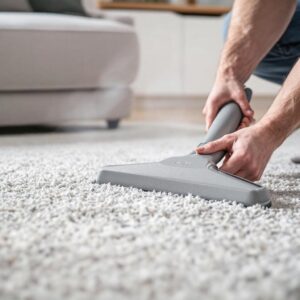
As a first step, you need to clean your carpet so the larger particles can be removed: allowing any sanitising product to work more effectively. It can be done by vacuuming – ideally with a HEPA-filtered vacuum, particularly for allergy‑sensitive households. Make slow, overlapping passes and give more focus to high-traffic zones.
Step 2 – Choose Your No-Steam Sanitising Method
Each household has different needs. Many factors can influence the choice of method, including the types of substances you are dealing with (minor dirt, organic spills, chemical substances, bodily fluid contamination, etc.), how delicate your carpet fibres are, how sensitive your household is to fragrances or chemical residues, and more.
Understanding these factors helps you avoid damage, choose safe products, and get better sanitising results without a steam cleaner:
Method 1 – Mild Detergent + Warm Water
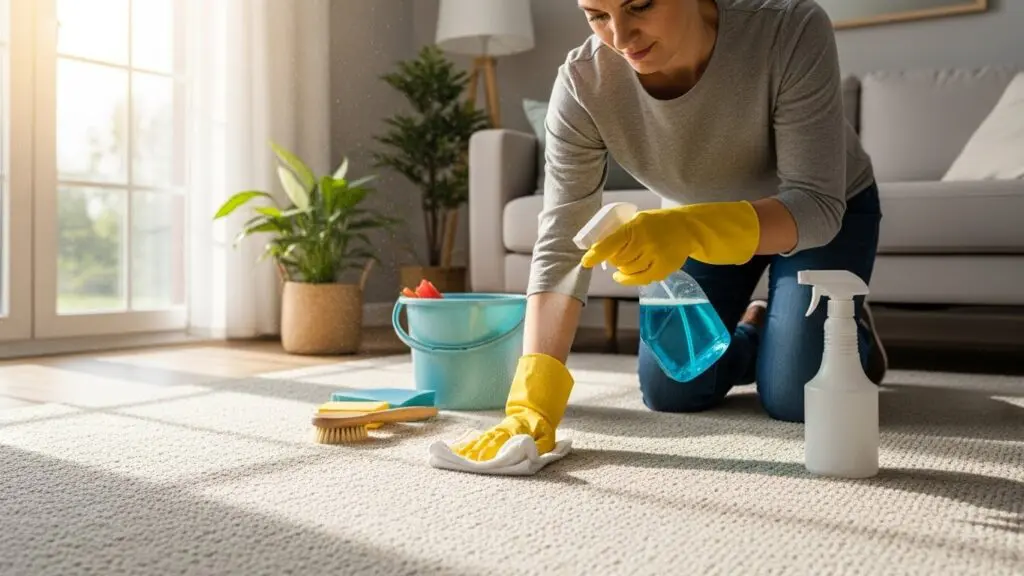
This method can remove dirt and reduce some germs, but it isn’t a top-notch disinfectant. As the gentle universal option, you’ll need a washbasin, a soft brush (preferably an outworn toothbrush), a microfibre cloth, and a cleaning product (such as mild dish soap or laundry detergent). Fill the wash basin with warm water, then add a small amount of the cleaning product. Then:
- Evenly moist, dab, or press the spot without over-soaking it.
- Softly scrub and rake the spot with the brush.
- Blot the remaining moisture, and do it again. Repeat this process several times until you feel it’s enough.
Finally, rinse off any remaining residue with clean water and a new cloth, then blot until dry.
Method 2 – Vinegar Solution for Deodorising & Light Sanitising
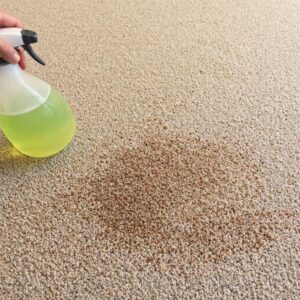
Using vinegar, although not an approved EPA-listed disinfectant for carpet’s porous materials, can be one way to reduce germs that cause unpleasant odours. You can still use it for general maintenance, but not for severe contamination (vomit, diarrhoea, sewage, bodily fluids, or other organic stains). Combine 1:1 water and white vinegar in a spray bottle, then:
- Lightly spray the exact spot on the carpet.
- Leave it for 10-15 minutes.
- Blot thoroughly until dry. Repeat this process several times until the odours fade away.
- Allow it to dry completely before any further use/activities.
Method 3 – Hydrogen Peroxide for Stains and Germ Reduction
This method is only recommended for treating organic stains on colour‑safe fabric. Although it is very effective as a disinfectant, it should be used carefully to avoid bleaching or fading your carpet. So, you need to use products with a maximum hydrogen peroxide content of 3%. Always:
- Patch-test a small, non-visible area before a larger application.
- Only apply sparingly. Then leave for 5-10 minutes to see the initial effects.
- If it looks non-harming, repeat the process until it feels enough.
- Blot gently to extract the remaining residue, then let it dry.
Method 4 – Carpet Disinfectant Spray
Before spraying your carpet with any such product, always read the label/instructions and make sure it is approved, with sayings like “Suitable for soft surfaces/carpets.” Also, find products that can guarantee the eradication of the microorganism. Avoid over-wetting it and always ventilate well after each use. For the steps:
- Pre-clean the areas/spots by vacuuming them.
- Spray evenly on the targeted areas/spots.
- Follow the stated ideal dwell time to ensure all microscopic organisms are completely eradicated.
Method 5 – Baking Soda for Odours
While this is not considered a disinfecting measure (it does not eliminate microorganisms), baking soda can deodorise your carpets: reducing or eliminating unpleasant odours caused by pets or any general mustiness.
It works for almost all types of fibre. The method is also relatively easy. Simply sprinkle it on your carpet and let it sit overnight. For finishing, vacuum thoroughly the next day.
Special Situations When You Must Really Care About Germs
For more dire conditions, such as biological spills, illness recovery, or vulnerable household members, this requires a more thorough microbial control. For homeowners who want a more complete understanding of carpet hygiene and maintenance, you can also explore our Christchurch Carpet Cleaning Complete Handbook.
After Someone Has Been Sick
Some minor illnesses and symptoms, such as the common cold, flu, vomiting, and diarrhea, require specific immediate action:
- Handle all remaining solid organic residue using protective gear.
- To remove any remaining stains, you can use a mild detergent and water solution, then add peroxide or another carpet-safe disinfectant.
- Blot the spot to avoid spreading it into clean areas/spots.
- Dispose of all the filth and contamination properly. Don’t forget to wash your hands.
Pet Accidents on Carpet
To completely remove faeces and urine stains, use enzyme cleaners. Since those substances are mainly organic matter, which contains protein, they can be easily broken down.
Then, you can proceed with any method of your choice above. Since pets often deliberately mark their territory, eliminating the smell can prevent the recurrence of the accidents.
Baby Crawling Areas and Allergy‑Sensitive Homes
To address this issue, you need to be more selective in choosing cleaning products. Ensure the ones you use are low-fragrance and child-safe. To maintain cleanliness, clean diligently using a HEPA vacuum. If accidents or spills occur, blot carefully to minimize any leftover or residual material.
Drying Properly, Or You’ll Grow More Germs
Post-hygiene drying is critical to prevent much more serious problems. Apart from being a breeding ground for any microbial, wet/damp carpet can also be an ideal place for mould and mildew to grow. To dry properly:
- Open the window, run fans, and also a dehumidifier if it’s a wet day
- Avoid any activity (pets, children, or any residents/guests) in areas/spots that are being dried.
- Dry until the areas/spots no longer feel cold and have no musty smell.
How Often Should You Sanitize Carpet Without a Steam Cleaner?
Again, every home has different needs. The higher the traffic and activity in carpeted areas/spots, the more frequently hygiene efforts need to be carried out. To that end, place as many doormats as possible throughout the house, and also implement an indoor no-footwear policy. Routine upkeep can reduce the need for heavy sanitizing:
- Home with minimal activity: you can do this 1-2 times every few months, and areas/spots treatment.
- Homes with pets, children, or high foot traffic: you need to cleanse monthly or when special situations like those above occur.
When Do-It-Yourself (DIY) Isn’t Enough – Time to Call a Professional
As long as the issues with your carpet are only minor, such as those above, a DIY no-steam cleaning can still meet your home carpets’ hygiene needs. But the story will be different if more serious things happen. Make sure you call professional help as soon as possible if the following things happen to your carpet:
- Returning/lingering odours even after doing the methods above.
- Recurrence of pet accidents in the same areas/spots.
- Homes with very high sensitivity occupants, such as infants, elderly residents, or immunocompromised individuals.
- Fatal sewage overflow or flooding.
To address the severe issues above, a professional hot water extraction (also known as a steam cleaner) can deliver far better, cleaner results than DIY methods.
And if you need proper deep sanitisation, especially for Christchurch and the surrounding areas, there is no better recommendation than Hyper Carpet Cleaning. We offer professional carpet sanitising and Deep Carpet Cleaning Services in Christchurch.
With a vast portfolio, we are experienced in handling a wide range of carpets. Supported by advanced techniques, eco-friendly cleaning products, and go-green tools, your carpet will be clean without ever leaving any harmful residue for your loved ones. So, what are you waiting for? Contact us now and experience all the benefits!
FAQs
Q: Can I sanitise carpet with just vinegar?
A: It helps with odours and minor germ reduction, but is not a full disinfectant.
Q: Is baking soda enough to disinfect carpet?
A: No. Baking soda deodorises only.
Q: Can I use bleach on carpet?
A: Avoid it – colour loss and fibre damage are highly likely.
Q: How long do germs live in carpet?
A: Some can survive for days, depending on the microorganism and fibre type.
Q: What’s the safest method for pets and kids?
A: Use mild detergent, rinse thoroughly, choose carpet‑safe disinfectants, and ventilate well.